Robben Island
Cape Town
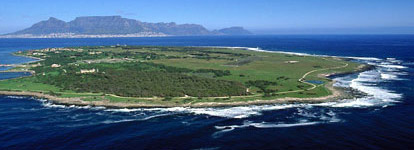
This famous little windswept Island has captured hearts and minds of travellers to Cape Town and worldwide. Robben Island combined is an old jail, historic site and is on top of the list of things to doing when visiting Cape Town.
Robben Island has become the face of the apartheid oppression story and victory of human rights cruelty in South Africa, and has since been a place of triumph since 1997. Today the Island runs as a museum, facilitating educational programmes for schools and assisting in South African tourism. Robben Island translated as seal Island is encompassed over 574 hectares of land, which is now State owned, with the exception of the island church.
Tickets to island can be purchased at the Nelson Mandela Gateway, in the V&A Waterfront. Here visitors can catch a ferry which crosses over 11km to Robben Island. The 45 minute ferry journey is pleasant and passengers can catch sights of seals and a dolphins, as well as different view points of Table Mountain. The Island tour runs for approximately three and a half hours, which includes the ferry ride.
Once on the island, a coach transports tourist around the Island, to view many of the attractions; such as the lime quarry where prisoners laboriously dug daily away at the limestone, and the leper church. After which visitors are given a tour of the infamous prison. The tour of the prison is presented by a former political prisoner, and here you can view the tiny cell in which Mandela spent 18 of his 27 years of imprisonment. This moving experience is very informative and well worth a visit.
The Island is very rich in history, and was first discovered by Europeans in 1488 when Bartholomew Dias reached Table Bay. For nearly 400 years, Robben Island, 12 kilometres from Cape Town, was a place of banishment and imprisonment.
In 1846 for a span of 85 years the Island was used as a hospital for leprosy patients, and the mentally and chronically ill and later was then was transformed in the 1930’s as a training and defence station aiding World War 2. Used by the Dutch and the British colonial governments as a prison from 1961 it was again used as a prison, primarily to house those opposed to the apartheid government of the time and it’s most famous prisoner was Nelson Mandela. The prison even became an informal university behind bars. In 1999 the Island and prison was declared a World Heritage Site.
Robben Island is currently a national memorial, where ferries leave every day hourly. The northern parts of the island have been declared as a bird sanctuary. With the penguin colony becoming a popular tourist attraction. Robben Island hosts about 132 bird species, which include various seabirds, water birds and terrestrial birds. A few species have been introduced to the Island by humans such as the Chukar Partridge and Guinea Fowl. Other animal sightings of buck, ostrich, and rabbits are also to be found on the island.
Robben Island basically runs off the land by generating its own electricity and obtaining water from nine boreholes. The museum also arranges workshops, tours and camps for children and adults, allowing further learning about both the historical and modern day South Africa. Open throughout the year, weather permitting, the island offers glorious and one of a kind views of Table Mountain and Cape Town.
To book a tour to Robben Island, contact:
Canal Walk Information Office:
Tel: (021) 555 3100/3600
Fax: (021) 555 3040
E-mail: touristinfo@canalwalk.co.za
Cape Town Tourism Information Office:
Tel: (021) 405 4500
Fax: (021) 405 4524
E-mail: info@tourcapetown.com
Nelson Mandela Gateway:
Tel: (021) 413 4200
Fax: (021) 419 1057
E-mail: ebookings@robben-island.org.za
|


